CCTV Monitoring Employees: UK Law and Practical Steps
CCTV monitoring employees under UK law: define the purpose, assess necessity, complete any required DPIA, inform workers and control footage and access.
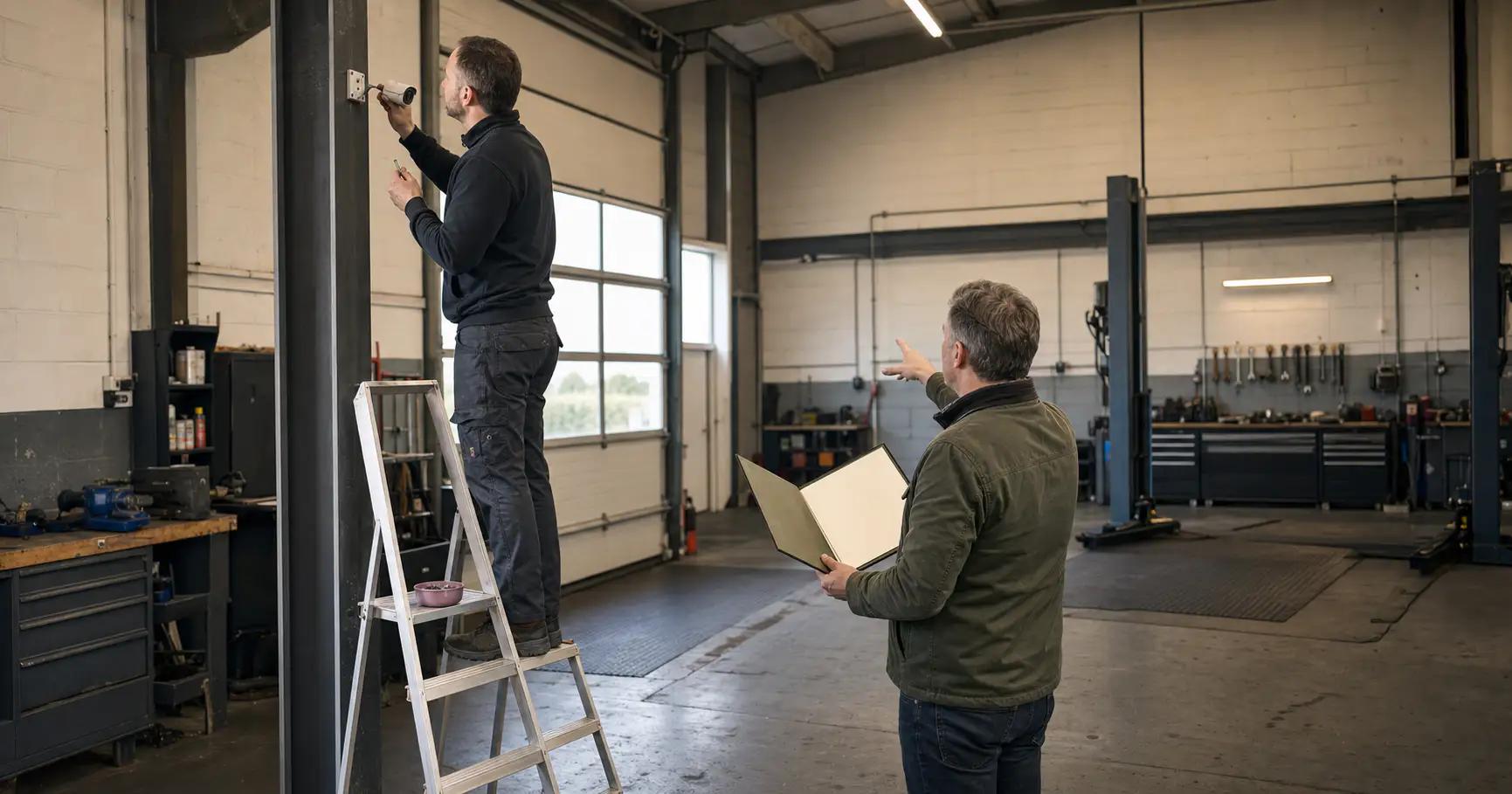
After stock disappears twice, an operations manager prices four cameras and asks facilities to book the installer. The proposed sign at the entrance is not the first compliance step. CCTV monitoring employees under UK law begins with the purpose, alternatives, likely impact and design, before a camera records anyone 1,2.
Quick Answer. CCTV monitoring employees under UK law can be lawful when an employer has a specific purpose, valid basis, necessity and proportionality, risk assessment, clear worker information, secure access and a short retention period. Consent rarely fits employment monitoring. Covert use and audio demand exceptional justification, and employee access rights still apply to footage 1,2.
Define the event the camera should address
“Security” is too broad to design or defend a workplace camera system. The employer should identify the concrete problem: repeated stock loss at a loading bay, unauthorised entry after hours, an accident pattern around one machine or threats at a public counter. The purpose determines where a camera might be necessary, which times matter and what evidence would show success.
Define the specific event, test less intrusive options and choose a lawful basis that reflects the employment relationship. If high risk is likely, complete the DPIA before fixing the design; otherwise preserve the screening decision. Configure each camera to the approved purpose, inform affected people, and control access, retention and post-launch review 1,2,3.
The same purpose should be tested against less intrusive options. Better locks, access logs, lighting, separated stock authority, alarm sensors, supervision or process changes may address the risk without recording workers continuously. A camera is not necessary merely because it is cheaper than correcting a weak process.
| Question before purchase | Evidence to record |
|---|---|
| What happened? | Dates, locations, losses, incidents and existing controls |
| What is the purpose? | One outcome the system is intended to achieve |
| Who will be recorded? | Workers, visitors, customers, contractors and passers-by |
| What alternatives were tested? | Less intrusive controls and why they are insufficient |
| Where and when? | Exact field of view, operating hours and excluded spaces |
| How will success be reviewed? | Incident trend, review date and removal trigger |
Purpose limitation matters after installation as well. Footage collected to investigate stock loss should not quietly become a general productivity score or attendance tool. A new use needs a fresh purpose, basis, necessity and transparency assessment before it begins 1,2.
Choose a basis that reflects the employment relationship
The employer needs a UK GDPR lawful basis for personal-data processing. Consent rarely provides a stable answer because workers may not be able to refuse freely, and the employer often intends to monitor regardless of the response 1,2. Asking for a signature does not correct that imbalance.
Legitimate interests may be relevant to a proportionate private-sector security purpose, but the phrase is not a result. The employer identifies the legitimate purpose, tests whether monitoring is necessary and balances the impact on workers and others. The record should explain locations, times, expectations, alternatives, safeguards and the consequences of being observed.
Other contexts may engage a legal obligation or public task, but the employer should identify the actual instrument or function rather than select a label that sounds stronger. A basis supports the defined processing; it does not remove duties of fairness, transparency, minimisation, security or storage limitation 1.
The assessment should distinguish observation from employment decisions. Viewing a clip after a safety incident differs from using continuous footage to rank workers. Where monitoring data feeds discipline, performance, automated analysis or attendance decisions, the impact and reasonable expectations change materially.
Complete the DPIA before the design is fixed
A data protection impact assessment is required before processing likely to result in a high risk to rights and freedoms 1. Workplace monitoring can present that likelihood through systematic observation, scale, power imbalance, sensitive locations, audio, special-category inferences, biometric features or combining datasets 2. The employer should screen the proposal honestly rather than decide that small premises make risk impossible.
The DPIA describes the processing, purpose and lawful basis; assesses necessity and proportionality; identifies risks to people; and records measures that reduce them. Those measures should alter the proposal. A loading-bay camera may be narrowed away from workstations, activated outside normal hours, deprived of audio, given shorter retention and restricted to two authorised reviewers.
| DPIA risk | Design response |
|---|---|
| Continuous observation changes behaviour and trust | Limit hours and field of view; use incident-triggered review |
| Camera captures rest or private areas | Exclude the area physically, not through a policy promise |
| Footage reused for unrelated performance control | Restrict purpose, permissions and review procedure |
| Unauthorised browsing or export | Named roles, access logs, secure export and review |
| Footage kept because storage is available | Automatic overwrite and bounded incident holds |
| Analytics creates new inferences | Disable features or assess them as separate processing |
Consultation can expose impacts the project team missed. Workers or representatives may know that a camera aimed at a doorway also records a break area, a religious practice, union activity or medical visits. Consultation does not transfer the decision to workers; it gives the employer better evidence before final design.
Where high residual risk remains after mitigation, the employer needs to consider the applicable prior-consultation duty rather than launch and hope the risk does not materialise 1.
Turn the assessment into camera settings
A written assessment has little value if the installer receives only a floor plan and a request for “full coverage”. The approved purpose should become a configuration sheet for each camera: the exact field of view, active hours, recording trigger, frame rate, audio state, masking zones, retention period, viewing roles and export permissions. Procurement, facilities and the privacy owner should sign off the same version.
Test the view with ordinary work happening. A loading-bay camera intended to record vehicle access may also capture a packing bench, neighbouring premises or a public footpath. Digital masking, a narrower lens or a different mounting point can remove irrelevant areas. A verbal promise that managers will ignore part of the picture is not data minimisation.
The test should include the system's failure modes. Disconnect the network, fill the local storage, try a routine export and confirm what happens when the overwrite date arrives. Check whether the vendor account can still view footage, whether default administrator credentials remain active and whether a mobile application silently enables live viewing. Security controls should be observed, not inferred from a brochure 3.
Record the final settings and keep a dated image from each field of view. That evidence lets a later reviewer distinguish the approved system from drift. If a camera is moved, a microphone is enabled or analytics appear after an update, the change becomes visible and returns to the assessment before use.
Vendor instructions belong in the same handoff. State whether support staff may connect remotely, where recordings are stored, who controls encryption keys and how access ends when the contract ends. Ask for evidence that provider accounts are individual and logged. If the service cannot separate routine support from unrestricted viewing, the employer has learned something important before workers are recorded, while a different configuration or supplier is still possible 1,3.
Record rejected settings too, so a later administrator does not restore them as harmless defaults.
Tell workers more than a sign can hold
Transparency begins before monitoring. Workers should receive clear information about the purpose, locations, operation, basis, recipients, retention, rights and contact route 1,2. A sign helps people notice a camera in a physical space, but it cannot carry the whole explanation and does not repair a system that lacks necessity.
The notice should match reality. If cameras operate only outside opening hours, say so. If incident clips may reach an insurer or police, explain the relevant circumstances rather than listing every possible recipient as boilerplate. If audio is disabled, the technical configuration should prove it.
People entering from different routes need a reasonable chance to see the warning. Contractors, customers and delivery drivers may never read an employee notice. Sign placement, website information and contract onboarding can work together, but the content should remain consistent across them.
An internal procedure should tell managers what they may request and why. “Can you check whether Sam was at the desk?” is not automatically within a theft-prevention purpose. Requests for access should name the incident, time range, authoriser and intended use so the footage owner can refuse informal browsing.
Covert monitoring is a bounded exception
Covert monitoring removes the transparency workers normally receive and is therefore highly intrusive. The ICO's employment guidance treats it as exceptional 2. A defensible proposal begins with a specific suspected activity, reasonable grounds and evidence that informing people would prejudice the investigation or that less intrusive measures are inadequate.
The scope should be narrow in subject, place and time. Senior authorisation, limited operators, an end date and a documented review are essential. Continuous covert observation “in case something happens” is not a targeted investigation. Cameras should not cover places where privacy expectations are especially strong.
Once the purpose ends, covert monitoring ends. Relevant clips enter a controlled investigation record; irrelevant footage follows the short overwrite path. The organisation then reviews what may be disclosed, how affected people can be informed and whether the investigation revealed a control problem that should be addressed openly.
Covert audio raises the impact further. Capturing every conversation around a suspected event gathers personal data about workers and visitors far beyond visible conduct. A proposal that cannot explain why images and other controls are insufficient is unlikely to justify adding sound.
Audio and smart features are separate decisions
Many cameras ship with microphones, facial recognition, movement classification or remote cloud analytics. A feature being included in the device does not make its use necessary. The employer should disable unused capability and record the configuration, because default settings can expand processing without a deliberate decision.
Continuous audio is materially more intrusive than images. It captures content, tone, relationships and conversations outside the camera's central purpose. If audio is considered for a narrow safety or threat scenario, the DPIA should assess activation, audibility, people affected, notice, access, retention and less intrusive alternatives separately 2.
Biometric identification or emotion and behaviour analytics cannot be treated as a software upgrade to an existing CCTV assessment. They introduce new data, inferences and potential decisions. The organisation needs a fresh legal and risk analysis before procurement, including any additional conditions required for more protected data 1.
Remote access also changes the threat model. A phone application that lets several managers watch live feeds can turn a bounded local security control into continuous supervision. Access should follow named roles, purpose and logging, with unnecessary live viewing disabled.
Control access, retention and disclosure
Footage should be accessible only to people who need it for the documented purpose. Named roles, individual accounts, strong authentication, access logs and secure export reduce casual viewing and uncontrolled copies 3. A shared monitor password and downloadable clips in ordinary email undermine the safeguards described in the DPIA.
UK GDPR sets no universal CCTV retention period. The employer chooses the shortest period that serves the purpose and configures automatic overwrite. Routine footage may need days rather than months; a relevant incident clip can be preserved under a documented hold with an owner, reason and review date 1,2. The answer follows the purpose, not storage capacity.
| Footage event | Control |
|---|---|
| Routine recording reaches the period | Automatic overwrite with periodic test |
| Incident identified | Preserve only the relevant window under a logged hold |
| Internal review requested | Named purpose, time range, authoriser and viewer |
| Disclosure proposed | Verify authority, scope, secure channel and recipient |
| Export created | Protect, track copies and delete when the case ends |
| System retired | Securely erase device and provider-held recordings |
Requests from police, insurers, solicitors or customers are not automatic permissions. The employer verifies the request, identifies the lawful route, limits the footage and records the disclosure decision. A convenient request channel must not become a standing external feed.
An incident creates a second retention path that needs equal discipline. The person preserving a clip should record the event, cameras, start and end times, purpose, case owner and next review date. Preserve the smallest useful window, because copying an entire day for a ten-minute event creates a new archive of unrelated workers and visitors.
Working copies should not multiply across email, shared drives and personal devices. One controlled case record can hold the original, an access-controlled working copy, any redacted version and a disclosure log. Each derivative should have an owner and deletion point. This makes it possible to explain which footage still exists after routine recordings have overwritten.
When the investigation, insurance claim or legal hold ends, the case owner should close the exception rather than leave it indefinitely. Closure means confirming the outcome, deleting copies that no longer have a purpose, retaining only records needed for the continuing case and scheduling the next review for anything that remains. The same process should catch screenshots and exported stills, not only video files 1,2,3.
Subject access can require masking, not refusal
An identifiable worker may request personal data contained in footage under the right of access 1,5. The organisation should preserve the likely time window promptly because routine overwrite can destroy the material while the request is being handled. The search record should show cameras, dates, times and systems checked.
Footage often includes other people. Their presence does not automatically justify withholding the entire clip. The employer considers their rights and applicable restrictions, and may use cropping, blurring, masking or a supervised viewing arrangement where appropriate 2,5. The decision needs more than “third parties visible”.
The response should be secure and intelligible. A proprietary export that cannot be opened, a public link or an unverified email address can turn the access response into a new problem. Keep the supplied file, redaction decision, recipient verification and delivery evidence under controlled retention.
Access and erasure requests are not the same. A person asking to see footage has not necessarily asked for deletion, and an erasure request may meet continuing security, legal or claim needs. Separate the rights and explain each outcome.
Launch only when the operational record is complete
Before activation, the employer should be able to place one coherent file in front of a reviewer: incident and purpose, alternatives, lawful-basis assessment, DPIA decision and outcome, camera map, worker information, access roles, retention configuration, request procedure and review date. The record should show how the design changed because of the assessment.
The first post-launch review should test the actual field of view, hours, audio state, access logs, overwrite cycle, signs and notices. It should sample manager requests and confirm that informal performance viewing has not appeared. Any new purpose, feature or location returns to the assessment rather than inheriting the old approval.
The honest removal trigger belongs in the plan. If the theft pattern ends because access controls were fixed, or the temporary safety project closes, continued monitoring needs a renewed case. A system should not become permanent because the installation cost is already spent.
The first practical action is to stop procurement for one hour and write the event the camera must address. Map who would be recorded, the proposed field of view and the alternatives already tried. That page will reveal whether the project needs a narrower camera, a different control or no camera at all.
Last updated: 26 August 2026.
Frequently Asked Questions
Is CCTV monitoring employees lawful in the UK?
Do employees have to consent to workplace CCTV?
When does workplace CCTV require a DPIA?
Can an employer use covert CCTV?
Can workplace CCTV record audio?
How long should an employer keep CCTV footage?
Can an employee request CCTV footage of themselves?
Sources
Want this run on your business?
AI Foundation Audit — a structured assessment of your AI footprint: integration risks, governance gaps, ROI opportunities. Delivered as a comprehensive report you can act on.
You receive your AI Opportunity Report and Implementation Brief — tailored to your business and delivered immediately.